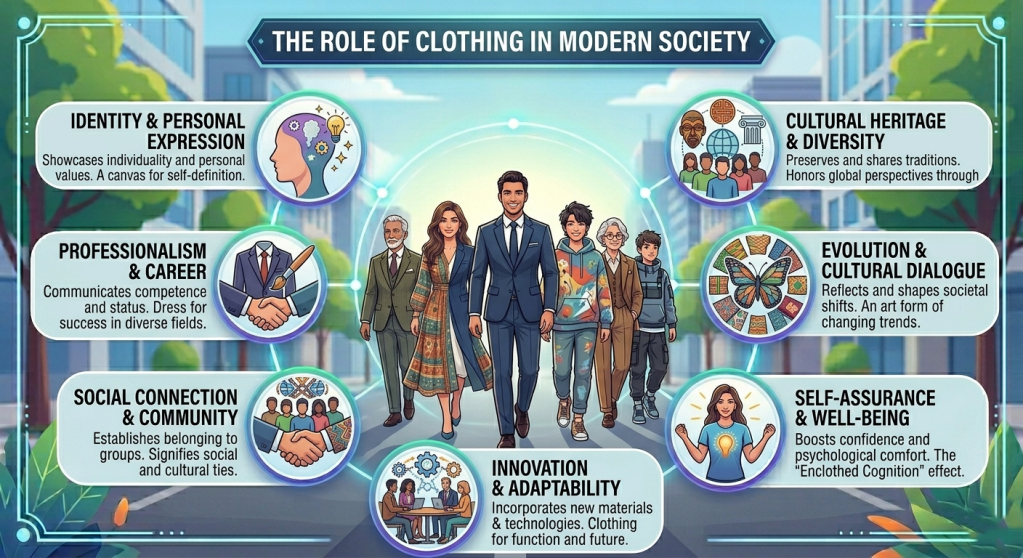
Walk down any street in any city and you’ll see it instantly: clothing tells a story before a single word is spoken. Suits, uniforms, streetwear, traditional garments, all of it signals something about identity, status, and culture.
Clothing has always done more than cover the body. In modern society, it carries weight in ways that go far beyond fashion trends or seasonal shopping.
And yes, sometimes that society-wide relationship with clothing comes down to something as simple as spotting a good yard of deal during a sale. But the bigger picture is much more interesting than just shopping habits.
Let’s look at the real role clothing plays in how modern society functions.
Clothing as More Than Just Fabric
It’s easy to think of clothes as purely functional or purely fashionable. In reality, clothing sits at the intersection of economics, identity, culture, and even technology.
Modern society has built entire industries, social norms, and even legal systems around what people wear and how they wear it.
Understanding this helps explain why clothing choices carry more significance than most people realize on a daily basis.
A Brief Look at How This Evolved
Clothing started as pure necessity, protection from weather and environment. Over time, it evolved into a marker of status, profession, and group identity.
Modern society has layered even more meaning onto this foundation, turning clothing into a constant form of communication.
Key Roles Clothing Plays in Modern Society
Here’s where this gets specific. These are the major ways clothing shapes how modern society actually functions.
1. Economic Engine
The clothing industry is one of the largest economic sectors in the world. It employs millions of people across manufacturing, design, retail, and logistics.
From massive fashion houses to small local boutiques, clothing drives significant economic activity in nearly every country.
This is also why sales events matter so much economically. A well-timed yard of deal can move enormous amounts of inventory, supporting entire supply chains in the process.
The Ripple Effect of Clothing Sales
When retailers offer discounts, it’s not just about individual consumer savings. These sales affect manufacturing schedules, employment, and even raw material demand throughout the supply chain.
2. Social Status Indicator
Clothing has long served as a visible marker of social and economic status. Designer labels, tailored fits, and certain materials often signal wealth or status, whether intentionally or not.
This dynamic exists across nearly every culture, though the specific markers vary significantly from place to place.
Modern society still relies heavily on these visual cues, even as attitudes toward materialism continue shifting.
3. Professional Identity
Many professions are instantly recognizable by clothing alone. Doctors in white coats, chefs in their uniforms, construction workers in safety gear.
This isn’t just tradition. Specific clothing often serves practical safety or hygiene purposes tied directly to the profession.
Modern workplaces continue to rely on dress codes and uniforms to establish identity, professionalism, and sometimes safety compliance.
4. Cultural Expression and Preservation
Traditional clothing remains a powerful way cultures preserve and express their identity, even within modern, globalized society.
Many communities maintain traditional dress for ceremonies, holidays, or daily wear, keeping cultural heritage visible and active rather than purely historical.
This matters more than ever as globalization pushes many societies toward similar, mainstream fashion trends.
5. Gender and Identity Expression
Clothing plays a significant role in how people express gender identity in modern society. What was once strictly divided by traditional gender norms has become considerably more fluid in many parts of the world.
This shift reflects broader social changes around identity, acceptance, and self-expression.
Modern fashion industries have responded, slowly, with more inclusive sizing, styles, and marketing.
6. Social Movements and Activism
Clothing has frequently played a role in social and political movements. Specific colors, symbols, or styles often become associated with particular causes or movements.
This turns clothing into more than personal expression. It becomes a visible form of solidarity or protest.
Modern social media has amplified this effect, spreading clothing-based symbols and statements faster than ever before.
7. Technology Integration
Modern clothing increasingly incorporates technology, from moisture-wicking fabrics to smart textiles that track health metrics.
This blending of fashion and function reflects how deeply technology has embedded itself into everyday life, even something as traditional as clothing.
Wearable technology continues expanding this role, blurring the line between clothing and personal devices.
8. Sustainability and Environmental Impact
Modern society faces growing pressure around the environmental cost of clothing production and disposal. Fast fashion, in particular, has drawn significant criticism for waste and resource consumption.
This has pushed many consumers toward more thoughtful purchasing habits, prioritizing quality over quantity and seeking genuine value, like a real yard of deal on durable pieces, rather than constant disposable purchases.
Sustainable fashion movements continue gaining traction as awareness around these issues grows.
9. Mental Health and Self-Perception
Clothing choices can significantly affect mental health and self-perception. Comfortable, well-fitting clothes often improve mood and confidence, while ill-fitting or uncomfortable clothing can do the opposite.
Modern society increasingly recognizes this connection, with more conversations around dressing for comfort and mental wellbeing rather than purely external validation.
10. Globalization of Fashion Trends
Social media and online shopping have accelerated how quickly fashion trends spread globally. A trend originating in one country can appear in stores worldwide within weeks.
This has created a more interconnected, though sometimes homogenized, global fashion landscape.
It’s also made finding a genuine yard of deal easier than ever, with online retailers competing globally for consumer attention through pricing and promotions.
How Modern Consumers Navigate Clothing’s Role
Given everything clothing represents, how do people actually make smart choices within this complex landscape?
- Balance style with function. Modern clothing choices often need to serve multiple roles, professional, personal, and practical, simultaneously.
- Stay aware of sustainability. Considering the environmental impact of clothing choices reflects modern social values increasingly important to many consumers.
- Respect cultural significance. Understanding the deeper meaning behind certain clothing styles helps avoid unintentional disrespect or appropriation.
- Shop strategically. Watching for a legitimate yard of deal on quality pieces supports smarter spending without compromising on values like sustainability or comfort.
- Stay flexible with personal expression. Modern society increasingly supports diverse, individual approaches to clothing and identity.
The Balance Between Individual Choice and Social Influence
Modern clothing choices exist within a constant tension between personal preference and social influence. While individual style matters, broader cultural and economic forces continue shaping what’s available, affordable, and socially acceptable.
Recognizing this balance helps consumers make more informed, intentional choices.
Conclusion
Clothing in modern society serves a role far beyond covering the body. It drives economies, signals identity, preserves culture, and even reflects broader social and technological shifts.
Every piece of clothing, from a uniform to a traditional garment to a trendy seasonal item, carries meaning within the larger social fabric.
Even something as simple as taking advantage of a real yard of deal connects to larger economic and cultural patterns shaping how modern society interacts with clothing.
Understanding this bigger picture adds depth to something many of us do automatically every single day: getting dressed.
FAQs
1. Why does clothing matter so much in modern society beyond fashion? Clothing reflects identity, status, culture, and even economic activity, making it far more significant than simple fashion trends alone.
2. How has clothing influenced social movements? Specific clothing items, colors, or symbols often become associated with particular causes, turning fashion into a visible form of solidarity or protest.
3. What role does sustainability play in modern clothing choices? Growing awareness of environmental impact has pushed many consumers toward quality over quantity, favoring durable pieces and smarter purchasing decisions like spotting a real yard of deal on long-lasting items.
4. Does clothing really affect mental health? Yes, to a meaningful degree. Comfortable, well-fitting clothing often improves mood and confidence, while uncomfortable clothing can negatively affect self-perception.
5. How has globalization changed clothing trends? Social media and online shopping have sped up how quickly trends spread worldwide, creating a more interconnected, though sometimes homogenized, global fashion landscape.


